 SalamatYar
Newborn Metabolic Screening: The Heel-Prick Test, Treatable Disorders, and the Best Time to Sample
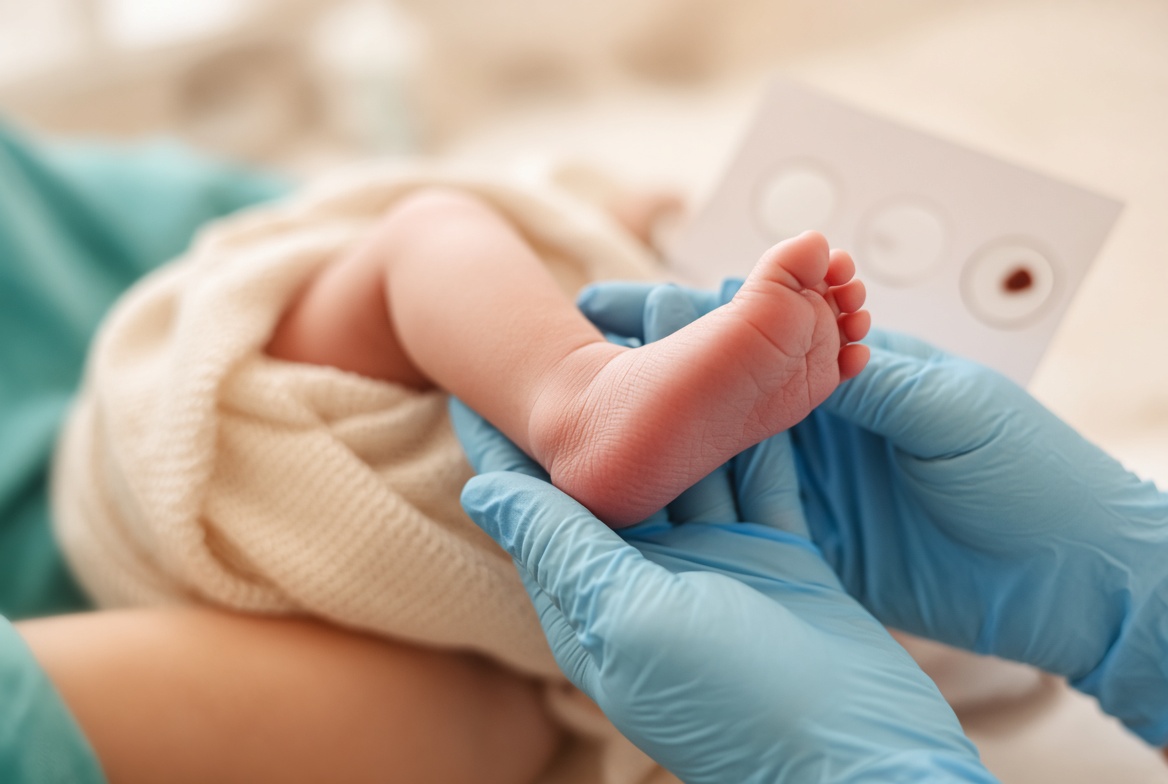
Many inherited metabolic disorders show no signs in the first days of life. The baby looks healthy, feeds and sleeps well, yet a harmful substance may be building up or a vital one may not be produced. Newborn metabolic screening uses a few drops of blood from the heel to find these conditions before symptoms appear, so treatment can start at the best possible time.
What is newborn metabolic screening?
A few drops of blood from the baby's heel are placed on special filter paper (a filter card), dried, and tested in a laboratory for several treatable conditions. This method is known as Dried Blood Spot testing. Examples of conditions covered by these programs:
- Congenital hypothyroidism: without timely hormone treatment, brain development and growth are affected.
- Phenylketonuria (PKU): the body cannot break down phenylalanine, and its build-up damages the brain unless a special diet is followed.
- Other inherited metabolic disorders: in broader programs, tandem mass spectrometry (MS/MS) can test dozens of disorders of amino acid, organic acid and fatty-acid metabolism from the same single sample.
The exact list of conditions depends on the national and provincial program, so ask the sampling center which conditions your baby is screened for.
Why does timing matter?
In national programs, the standard sampling window is 3 to 5 days of age. Research shows that very early sampling (for example, within the first hours) can push some markers such as phenylalanine above their true level and increase false-positive results, while late sampling delays diagnosis and treatment.
In preterm or low-birth-weight babies, hospitalized babies, and those who received intravenous nutrition or a blood transfusion, results can be affected. In these cases the doctor or center decides the timing and the number of samples.
How the sampling works
- Visit the designated center (a comprehensive health services center or laboratory) between day 3 and 5, with the baby's documents and the mother's mobile number.
- The heel is warmed and a drop of blood is taken with a single-use lancet.
- Blood drops are placed on the circles of the filter card, and the baby's details and card number are recorded.
- The sample dries and is sent to the screening laboratory.
- The result is reported; if it is suspicious, the baby is recalled for a repeat sample or a confirmatory test.
For sampling centers and health networks, newborn registration, filter-card number and sampling-round entry, automatic calculation of the baby's age at sampling, out-of-window alerts (outside 3 to 5 days), duplicate-card alerts and management reports are handled in the Salamat Negar system. Read the details in the news item "Hereditary Metabolic Screening of Newborns in Salamat Negar" (Persian).
What if the result is positive or suspicious?
The health center or laboratory contacts the mother's mobile number and asks for a repeat sample or a confirmatory test. Take this call seriously and act the same day. Many suspicious results turn out normal after repeat testing, but if a disorder is confirmed, early treatment (a special diet, medication or supplements) can prevent serious harm.
Tips for parents
- Even if your baby looks healthy, complete the sampling between day 3 and 5.
- Note the sampling date and the center's name, and keep the contact number available.
- If no result is reported within the stated time, follow up yourself rather than waiting for a call.
- Tell the doctor and the center about any family history of inherited disease, infant death or hypothyroidism.
- To comfort the baby during sampling, hold the baby close and, if possible, breastfeed.
Frequently asked questions
My baby is healthy. Is screening still necessary?
Yes. Many of these disorders cause no symptoms in the first days, and screening exists precisely to find them.
Does a positive result mean my baby is ill?
No. Screening only identifies babies who need further testing; the final diagnosis comes from confirmatory tests and a doctor's assessment.
What if sampling was not done between day 3 and 5?
Go to the health center or sampling center as soon as possible and explain the delay; more delay means later diagnosis and treatment.
Is the sampling painful?
It causes brief discomfort and is usually tolerated better with cuddling and breastfeeding.
Sources and related links
- Official Salamat Negar news: Hereditary Metabolic Screening of Newborns in Salamat Negar (Persian)
- Frontiers in Pediatrics, 2020: Effect of age at sampling on newborn MS/MS screening results
- National newborn screening guidelines and programs, Ministry of Health and Medical Education
This content is educational and is not a substitute for medical advice or professional assessment. If you are concerned about your baby's health, consult a pediatrician or your comprehensive health services center.